Featured Highlights

NABL Accredited (ISO/IEC 17025:2017) — traceable, documented calibration services across electrical, mechanical and thermal disciplines. Fast turnaround and certified reports.

M Tech Calibration was established in 2023 with a focus on reliable, traceable calibration. We hold accreditation to ISO/IEC 17025:2017 and are registered with RoC-Haryana. We provide NABL-approved methods and documented certificates for quality assurance and audit readiness.
| Page | Link |
|---|---|
| Home | Go to Home |
| About | Go to About |
| About Web | Go to About Web |
| Documents | Go to Documents |
| Calibrations | Go to Services |
| Repair | Go to Repair |
| Instruments | Go to Instruments |
| Workflow | Go to Workflow |
| Client | Go to Client |
| Contact | Go to Contact |
| FAQ | Go to FAQ |
Owned by Santosh Kumar Singh (DIN: 10492101). Certificate No: CC-4184. Location: 2707 Sanjay Colony, Sector-23, Faridabad.
We apply the same rigorous calibration principles used in high-precision scientific instruments: careful environmental control, traceable standards and documented uncertainty. Our lab focuses on repeatability, stability and clear reporting so your measurements are defensible in audits and contracts.
M Tech Calibration Lab LLP
These Terms and Conditions govern the provision of calibration, testing, inspection and related services by MTech Calibration Lab LLP (the Company) to the client (the Client). By placing an order or submitting instruments for service, the Client accepts these Terms.
Services include laboratory calibration, on-site calibration, testing, repair assessment and issuance of calibration certificates. Services are performed in accordance with applicable standards such as NABL and ISO/IEC 17025:2017 where relevant.
All prices are exclusive of applicable taxes unless stated. Standard payment terms are 30 days from invoice date. Late payments may attract interest and suspension of services.
Turnaround times are estimates and not guaranteed. The Company is not liable for delays caused by Force Majeure events.
Refunds are considered only where services are not deliverable and no work has been performed. If work has commenced, refunds are at the Company’s discretion.
Governed by the laws of India. Jurisdiction: Faridabad, Haryana.
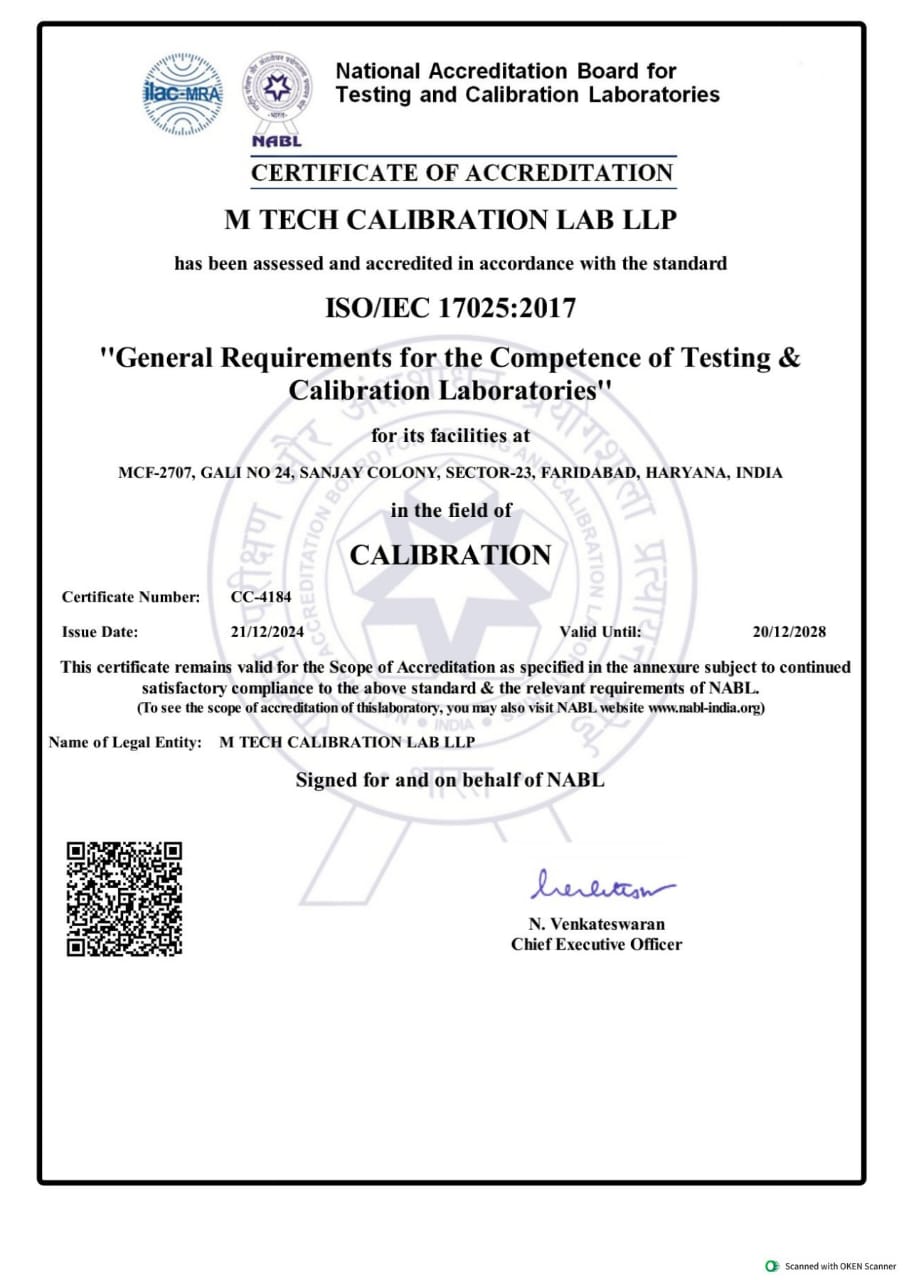
Accredited by National Accreditation Board for Testing & Calibration Laboratories (NABL).
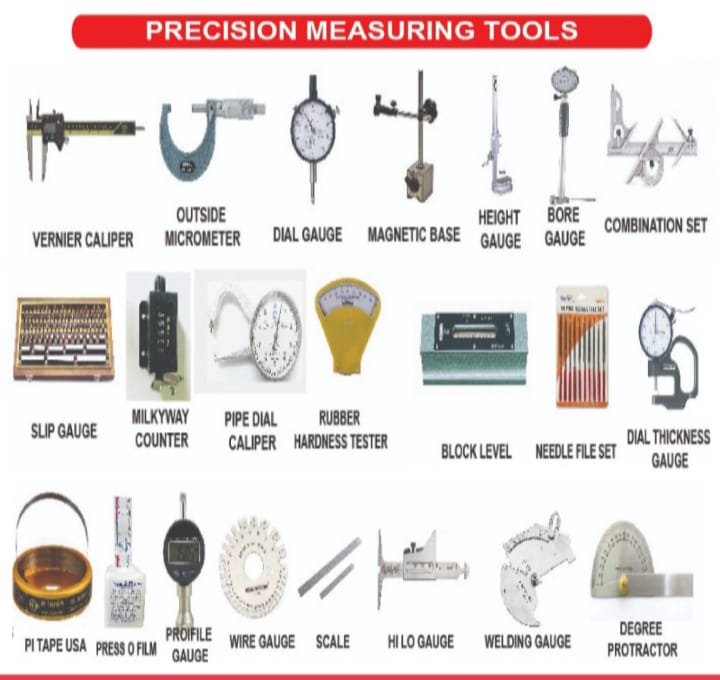
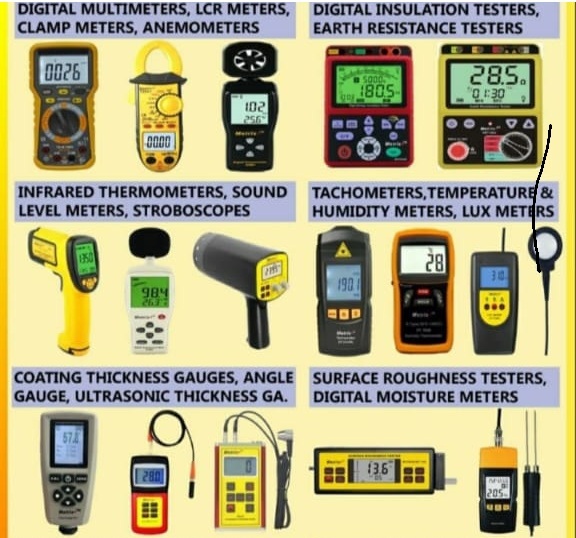
Multimeters, clamp meters, thermometers, hygrometers and lux meters calibrated using traceable standards and NABL-approved methods.
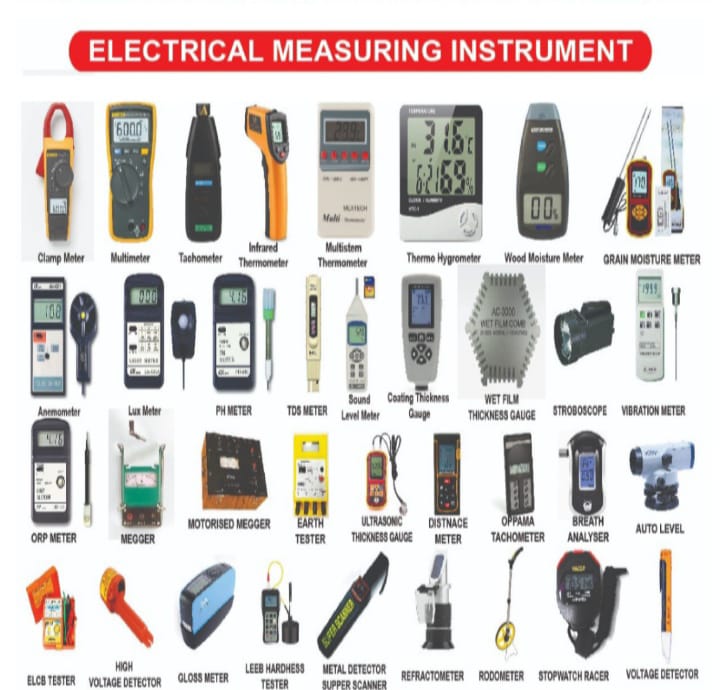
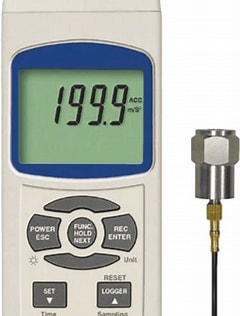
Vibration meters, ultrasonic thickness gauges, coating thickness gauges and hardness testers — functional checks and detailed reporting included.
Liquid and gas flow meter calibration using master meters and reference rigs for process control, billing and compliance.

Trained technicians diagnose faulty components, replace parts and perform power and functional tests to restore instrument reliability and accuracy. Repairs are documented and followed by verification calibration.
All repaired instruments are recalibrated and issued a new certificate with results and uncertainty. We maintain repair logs and provide recommendations to extend instrument life and reduce downtime.










We are proud to serve leading companies across automotive, engineering, healthcare, and manufacturing sectors.
“Trusted partner for three years. NABL-certified reports make audits seamless.”
★★★★★
“Fast turnaround and precise calibration. Certificates accepted in inspections.”
★★★★☆
“Reliable service and detailed uncertainty budgets. Highly recommended.”
★★★★★
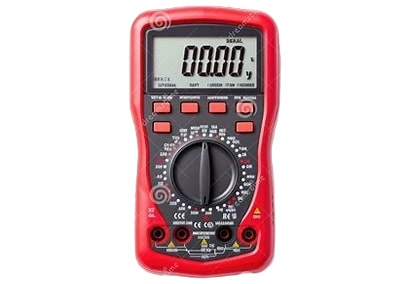
DC/AC voltage, current, resistance, frequency. Calibration with traceable standards.
Liquid and gas flow meters calibrated on traceable rigs. On-site options available.
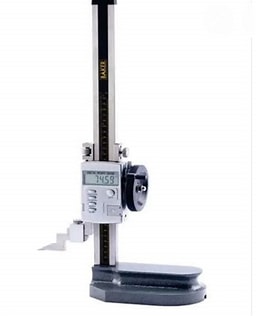
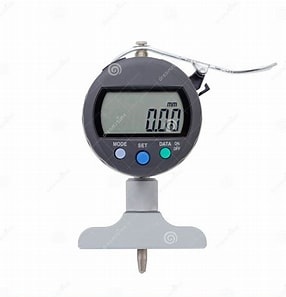
Dimensional calibration with gauge blocks and certified masters. Traceable reports.
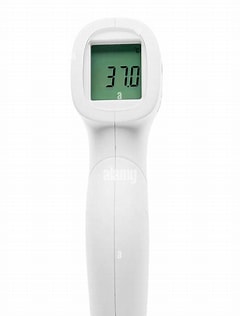
Temperature calibration in baths and dry-blocks with traceable reference probes.
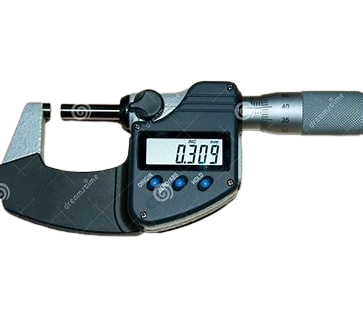
Calibrated with deadweight testers and pressure comparators. On-site available.
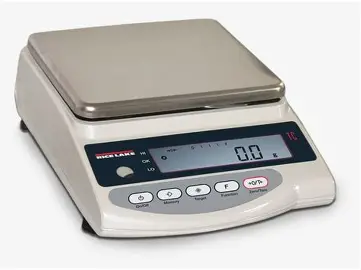
Balances and weights calibrated with traceable mass standards and uncertainty budgets.
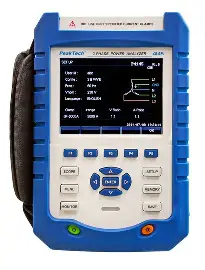
Calibration of power analyzers and energy meters with harmonic checks.
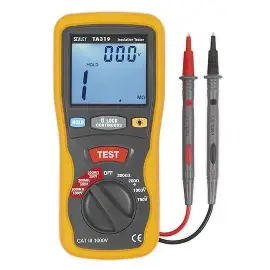
Insulation resistance and dielectric strength verification with traceable references.
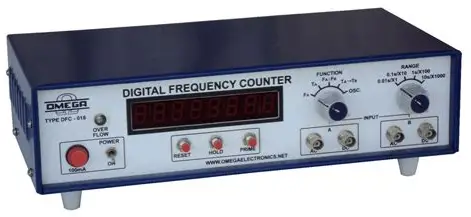
Frequency and timebase calibration with traceable frequency standards.
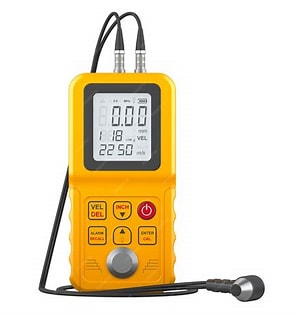
Calibration with buffer solutions and conductivity standards; electrode checks.
Calibration of torque tools with torque transducers and traceable standards.
Instruments Calibrated
Clients Served
Average Turnaround (hrs)

NABL Accredited Calibration Services (CC-4184)
Mon-Sat, 9 AM - 7 PM
Estimated reply: within 48 hours.
Redirects to Maps in 3s.
Directly contact our lab infrastructure.
You can support us by rating our company 5 stars. Your feedback helps us grow and serve you better.
⭐ Rate Us on GoogleCalibration is the process of comparing an instrument's output with a known reference standard to determine accuracy and document deviations. It identifies measurement error and quantifies uncertainty so you know how much trust to place in a reading. Proper calibration ensures traceability to national standards and supports quality systems and audits.
NABL accreditation confirms the lab meets ISO/IEC 17025 competence requirements and uses validated methods with documented uncertainty. Accreditation ensures results are internationally recognized and reduces audit risk. Choosing an accredited lab gives confidence for regulatory compliance, contractual acceptance and billing accuracy.
Turnaround depends on instrument type, workload and whether repairs are needed. Small instruments typically take 1–3 business days. Specialized instruments, environmental conditioning or on-site work may extend lead times; we provide an estimated schedule when you request a quote and can offer expedited options for urgent needs.
Yes — we offer on-site industrial calibrations for heavy equipment and process instruments. On-site jobs include environmental logging, uncertainty analysis and verification under actual operating conditions. We coordinate logistics and safety requirements to minimize downtime and ensure accurate results at your facility.
Each calibration includes a traceable certificate with measurement results, an uncertainty budget, environmental conditions and identification details. Certificates are downloadable, digitally archived and formatted for audits. Supporting raw data and recommendations are provided on request.
Calibration intervals depend on instrument stability, usage, criticality and environmental exposure. Annual calibration is common, but high-use or critical instruments may need more frequent checks. We can analyze your process and recommend an optimized schedule to balance risk, cost and downtime.
Yes — we diagnose and repair many instruments. Repairs are followed by recalibration and verification to ensure performance meets specifications. We provide a repair estimate, document parts replaced and deliver post-repair test reports for traceability.
We provide calibration services for many clinical and medical devices, following regulatory requirements and documented procedures to ensure patient safety and accurate diagnostics. Certificates are prepared to meet hospital quality systems and regulatory audits.
Uncertainty reporting includes the combined standard uncertainty, coverage factor and the expanded uncertainty at a stated confidence level. We provide a clear uncertainty budget for each measurement point, showing contributors and calculation methods so you can assess measurement risk.
Use the contact form above or send a WhatsApp message with instrument details, quantity and any special requirements. Include model, serial number and accessories. We will respond with a tailored quote, estimated lead time and shipping or on-site instructions.
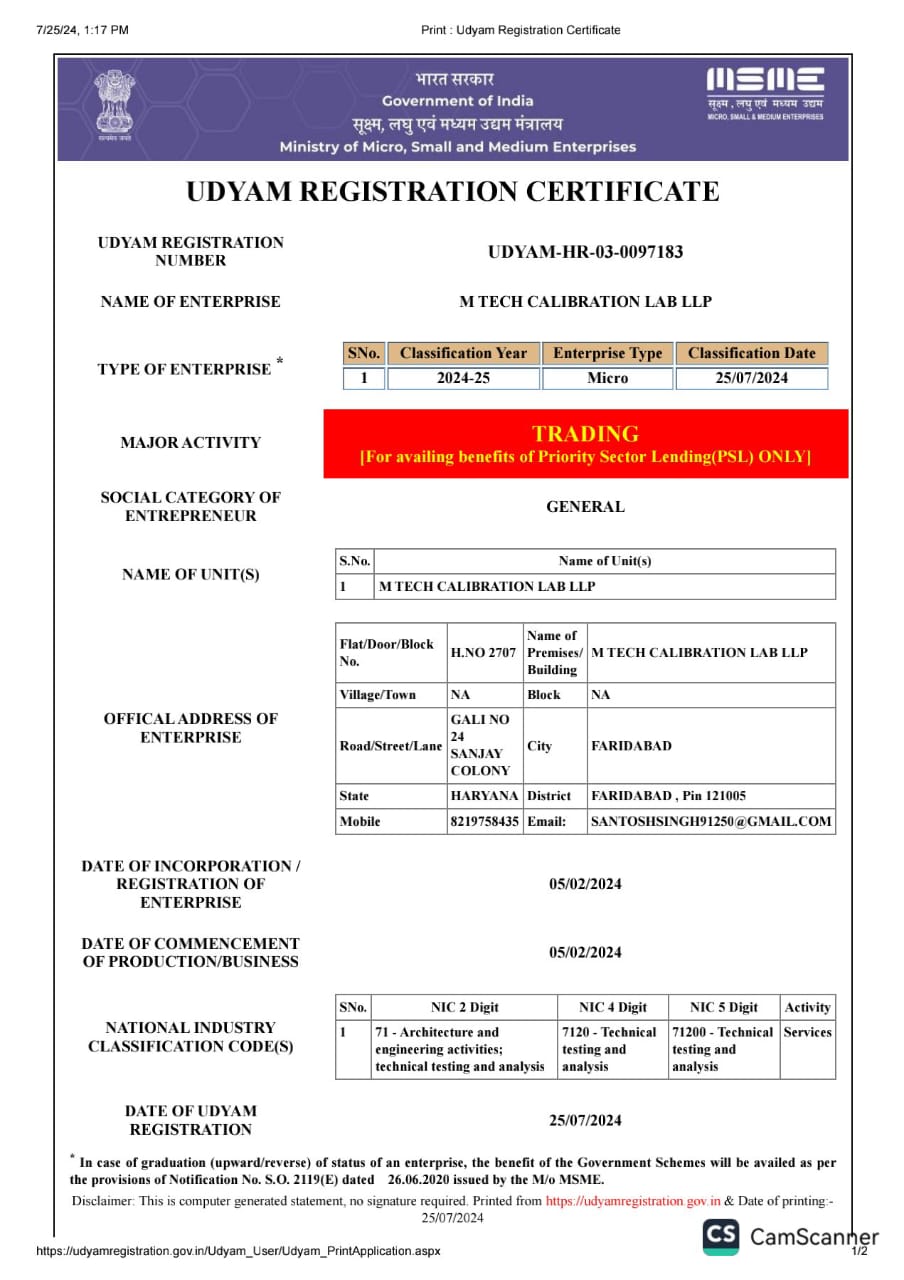
M TECH CALIBRATION LAB LLP is a registered legal entity with LLPIN ACF-3069. Incorporated with the Ministry of Corporate Affairs (MCA) on 5th February 2024, the company is approximately 2 years and 2 months old as of April 2026. It is registered at the Registrar of Companies (ROC), RoC-Haryana, with a paid-up capital of ₹10,000.
The Limited Liability Partnership Identification Number (LLPIN) of M TECH CALIBRATION LAB LLP is ACF-3069. This unique identifier confirms our registration with the RoC-Haryana.
The industrial landscape of Faridabad, Haryana, is a powerhouse of Indian manufacturing. Home to thousands of MSMEs and multinational corporations, this region produces everything from tractor components to aerospace fasteners. In such a high-velocity environment, mtech calibration is not merely a technical requirement; it is the fundamental baseline of quality. Without precise calibration services, the "Made in Haryana" label would lose its competitive edge on the global stage.
Calibration serves as the bridge between theoretical design and physical reality. When an engineer in Faridabad specifies a tolerance of 5 microns, it is the job of the calibration lab to ensure that the measuring tools used on the shop floor can actually "see" that 5-micron difference.
A common misconception in the Haryana industrial cluster is that calibration is just a "checking" process. In reality, modern mtech calibration is about quantifying Uncertainty. No measurement is 100% perfect; there is always a margin of doubt. Professional calibration services must calculate this doubt using complex mathematical models.
In this formula, 'k' is the coverage factor, typically set to 2 to provide a 95% confidence level. By providing these details, mtech calibration labs in Faridabad allow quality managers to make informed decisions about whether a product is truly "In-Spec" or "Out-of-Spec."
For the heavy industries of Haryana, pressure is a ubiquitous variable. Whether it is the steam pressure in a textile mill's boiler or the hydraulic pressure in an automotive stamping press, accuracy is non-negotiable. Calibration services in Faridabad utilize Dead Weight Testers (DWT), which work on the principle of $P = F / A$ (Pressure = Force / Area). This primary standard method is the most accurate way to verify industrial pressure gauges.
Temperature is the most measured variable in industrial processes. In the heat-treatment shops of Faridabad, even a minor deviation can ruin the structural integrity of steel. Mtech calibration experts utilize "Thermal Mapping" to visualize the temperature distribution inside a furnace. This involves using high-accuracy data loggers to ensure that the "Soaking Time" and "Peak Temperature" are uniform throughout the chamber.
Dimensional metrology is the backbone of the Faridabad auto-component industry. Accuracy in length, angle, and form is checked using master standards like Grade 0 Slip Gauges. Calibration services in Haryana must account for the Coefficient of Thermal Expansion (CTE). Since metal expands when hot, measurements must be corrected to the standard reference temperature of 20°C (68°F).
| Measurement Type | Faridabad Industry Application | Standard Instrument |
|---|---|---|
| Torque Calibration | Engine Assembly Lines | Torque Transducers / Master Wrenches |
| Hardness Calibration | Foundries & Forgings | Rockwell/Vickers Test Blocks |
| Acoustic Calibration | Environmental Testing | Sound Level Calibrators |
As Haryana becomes a hub for electronics and renewable energy manufacturing, the need for electrical calibration services has spiked. This involves verifying the accuracy of Volts, Amps, Ohms, and Frequency. High-end mtech calibration labs use Multifunction Calibrators that can simulate various sensors, allowing for the comprehensive testing of Process Indicators and Controllers.
In India, calibration is governed by the National Accreditation Board for Testing and Calibration Laboratories (NABL). For any business in Faridabad, Haryana, using an NABL-accredited lab is a prerequisite for ISO 9001 compliance. NABL ensures that the lab has the right equipment, the right environment (Temperature/Humidity control), and highly trained technicians. Mtech calibration certificates with the NABL logo are internationally recognized via the ILAC MRA agreement.
From the pharmaceutical labs in Haryana to the chemical processing units, mass and volume accuracy are vital. Calibration of analytical balances (using E2 or F1 class weights) ensures that chemical formulations are exact. Similarly, volumetric calibration of pipettes and burettes ensures that liquid measurements remain precise to the microliter.
Many business owners in Faridabad ask: "Why spend money on calibration?" The answer lies in the Return on Investment (ROI).
The future of calibration services in Haryana is digital. Cloud-based calibration management systems now allow Faridabad factories to track their entire inventory of thousands of tools. Automatic recall systems send alerts when a tool is due for its next mtech calibration, ensuring that no uncalibrated tool ever reaches the production floor.
Always check the Traceability Chain of your service provider. If a lab cannot prove how their master standard links back to the National Physical Laboratory (NPL), their "calibration" is just a piece of paper.
In the vast industrial tapestry of Faridabad and Haryana, precision is the thread that holds everything together. By investing in professional mtech calibration and high-quality calibration services, local businesses can ensure they remain leaders in an increasingly demanding global market. Whether it is a simple pressure gauge or a complex 5-axis CNC machine, the rule remains the same: If you can't measure it accurately, you can't make it perfectly.
Chromatic Precision
Most screens prioritize "punchy" visuals over accuracy. In a world where visual integrity defines professional excellence, monitor calibration isn't an elective—it's a necessity. Let's fix your colors.
Imagine spending hours meticulously color-grading a cinematic shot or retouching a high-fashion editorial, only to find it looks muddy on a client’s tablet or neon-green on a print. This is the "Great Chromatic Drift." Most monitors come from the factory with a "cool" bias—heavy on the blues—to make the whites look brighter and the screen cleaner in a showroom environment. For a professional, this is a disaster.
Monitor calibration is the process of adjusting your display’s output so it aligns with recognized global standards. It ensures that the digital values of a pixel (e.g., a specific shade of crimson) are rendered physically by your monitor as that exact color. Without it, you are essentially painting in the dark.
To calibrate effectively, we must understand the three pillars of display accuracy:
This is the range of colors your monitor can physically reproduce. Standards like $sRGB$ are the baseline for web, while $Adobe RGB$ and $DCI-P3$ offer wider ranges for print and cinema. Calibration ensures your screen stays within the "lines" of these spaces.
The standard for most photography and video work is D65 (roughly 6500K). This mimics natural daylight. If your monitor is set too high (7500K+), everything looks blue; too low (5000K), and it looks like an old book page.
Gamma describes how smoothly your monitor transitions from black to white. A standard gamma of 2.2 is typical for most OS environments. Luminance (brightness), measured in $cd/m^2$ (nits), should usually be between 80 and 120 for controlled lighting environments.
Software-only calibration (using your eyes) is better than nothing, but your brain is notoriously bad at being objective. Your eyes "auto-white balance" constantly. For true accuracy, you need hardware.
Uses color filters and silicon sensors to mimic the human eye. Perfect for LED and OLED screens. Brands like Calibrite (formerly X-Rite) and Datacolor lead this space.
The gold standard. These measure light by breaking it down into its full spectral components using a prism or diffraction grating. More expensive, but much more precise across different display technologies.
High-end professional monitors (like Eizo or NEC) have internal Look-Up Tables. The calibration data is stored inside the monitor itself, rather than just on your computer's graphics card.
Let your monitor run for at least 30 minutes to stabilize the backlight.
Dim the lights. Avoid direct glare on the screen which can skew the sensor.
Attach your colorimeter to the center of the screen, ensuring it sits flush.
Run the software. It will flash colors; the sensor reads the "truth," and the software builds an ICC profile.
The result is an ICC Profile. This file tells your operating system: "When the software asks for Red 255, actually output Red 248 because this specific panel is slightly too warm." This correction happens in the background, invisible to you but vital for the output.